Summary
In a previous post, we discussed how founders can build trust with investors. In this post, we will discuss the barriers that prevent founders from building trust.
Introduction
At the end of a previous post, we introduced the continuum of scalable ideas (below). Let’s explain it…
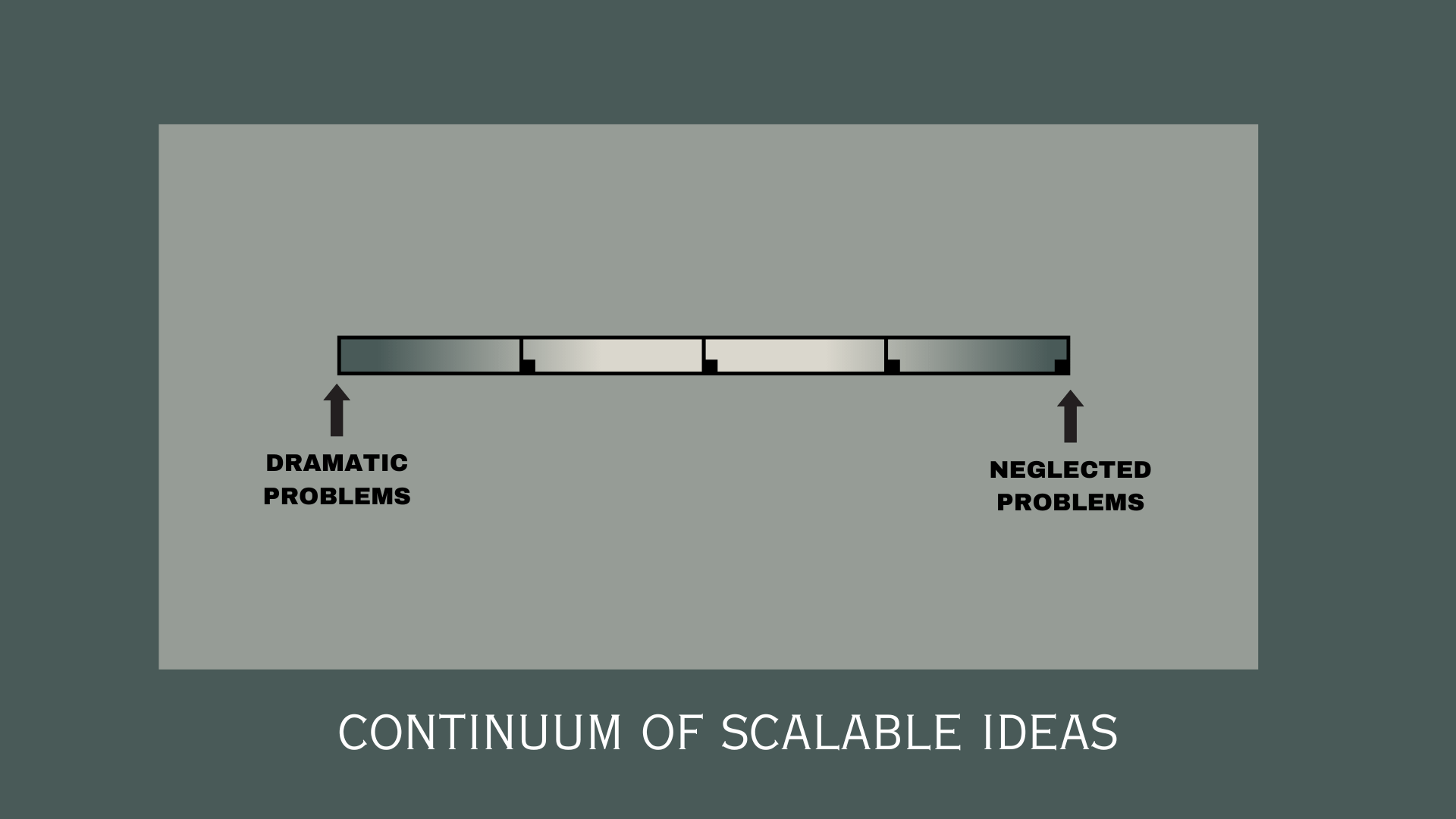
While we developed this visual and coined the phrase spectrum of scalable ideas, it’s worth noting that we did not invent the concept. The two poles labeled drastic and neglected come from an episode of the podcast Masters of Scale where the host - Reid Hoffman - said:
“The most scalable ideas don’t have to tackle dramatic problems - they have to tackle neglected problems”
He meant that there are two kinds of ideas that lead to venture-scale businesses. He described this while telling the story of how Tristan Walker found his scalable idea: a better shaving experience for men with coarse and/or curly facial hair.
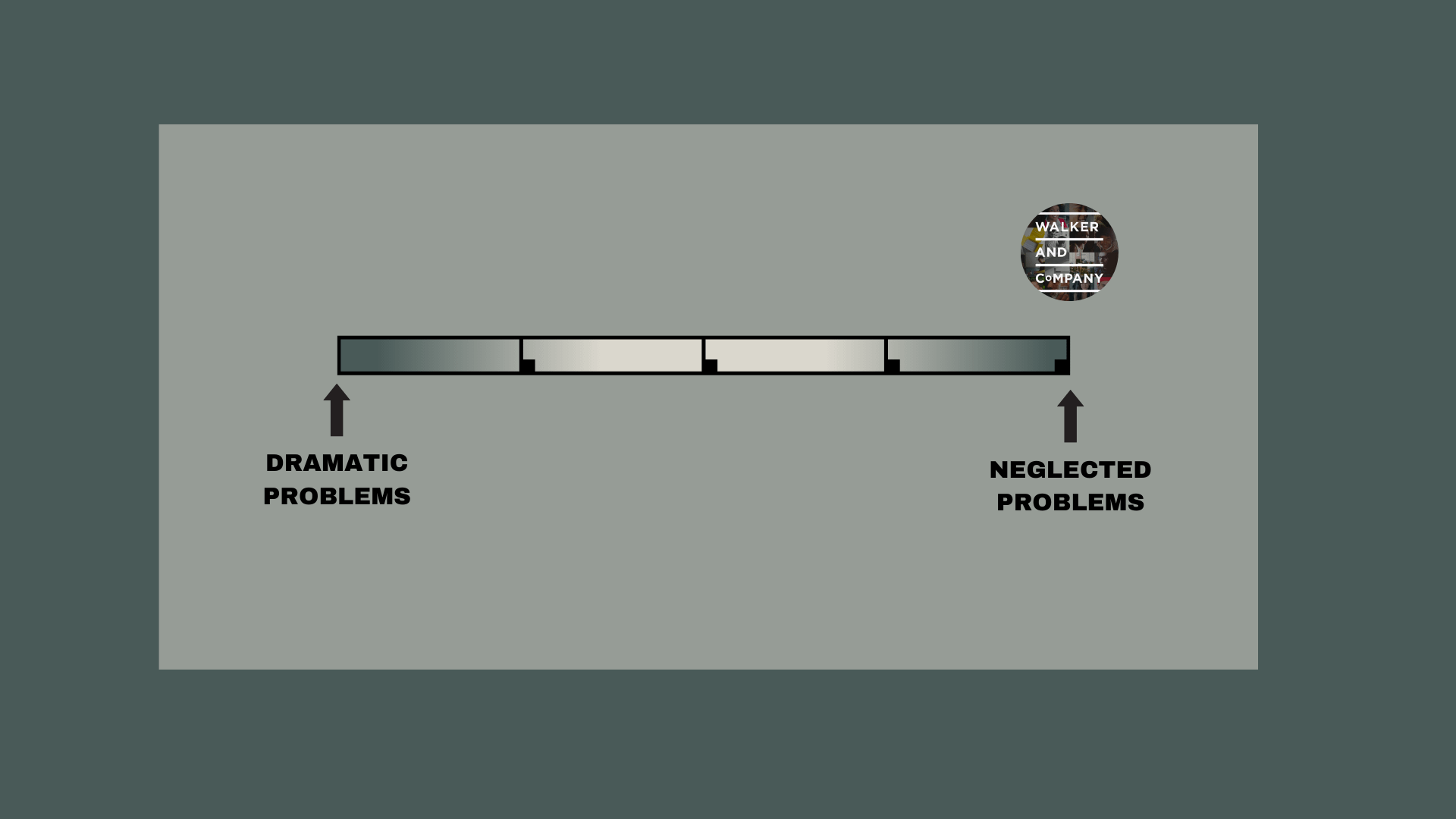
Using this chart, we can plot companies along the spectrum to categorize them into a type of venture-scale business. Walker and Company - with their reengineered razor, the Bevel blade - is a neglected problem, so we can plot them here:
Here’s Tristan describing his insight:
There are two things that happened to me that made me want to do this idea, which is why I think Ben started to believe that it was a bad idea that he needed to fund. . . before I even thought about building a business out of this, I got frustrated by the shaving experience. So I reached out to an old retired executive from a CPG company.
He said, "Tristan, look at photos of a black man 100, 120 years ago. None of them had razor bumps or shaving irritation on their faces." I thought he was being facetious and funny. So I said, I have time and a decent interest in this. I should look this up.I went to Flickr and I entered these generic search terms – Harlem Renaissance, black men in the 1920s… – and went through 1,200 photos. And I didn't find one with a non-cleanly shaven face. And it had to do with the tools they use. But more on that in a second.
The second thing that happened to me was I'd go to these luxury shaving stores. 100 percent of the time that I walked in – I would say, "I'm a black man with curly hair. I have to deal with this very important issue, what should I use?" And some of these luxury shaving stores are owned by the large incumbents (Procter & Gamble, as well as Art of Shaving being one of them). They sell wonderful products. But they also sell the very expensive multi blade razors that are their own brands.
The clerks at the luxury shaving stores never introduced me to the multi blade razors. They always took me to the off brand, single blade, double-edged safety razors.
And at that point I said, something's up here. Why is it the case that they have all the incentive in the world to take me to this thing (multi blade razors) but they're not talking to me about them? Because they haven't made it.
This observation taught him that the shaving experience had just recently become horrible for men with curly and coarse facial hair.
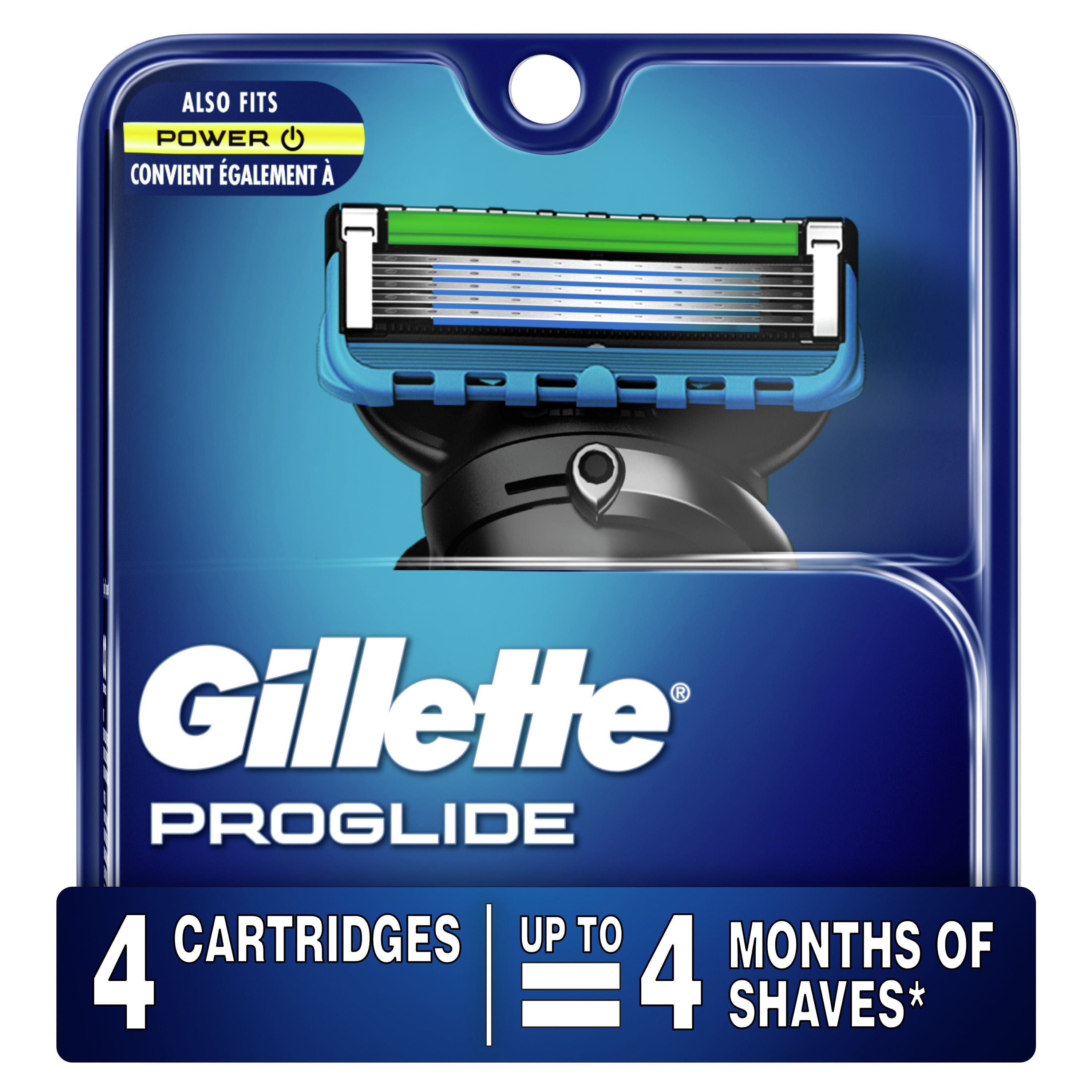
Large Consumer Packaged Goods (CPG) companies introduced multi-blade portable razors (below) to improve the shaving experience. These razors did improve the shaving experience for some men but not the experience of those with coarse or curly facial hair. For these men, the experience got worse.
When Tristan went to luxury shaving stores to speak with experts and get a professional recommendation on the shaving tools he should be using, those experts always directed him to double-edged safety razors (Figure 3). Not the multi-blade razors that were popular for at-home shaving (Figure 2).

The fact that large companies owned these luxury shaving stores, yet their paid experts were not recommending the multi-blade razors to Tristan led him to realize that the razor he was looking for did not exist, so he decided to create it.
This story provides a subtle lesson about the barriers founders face when building trust. Trust is an artifact of context.
By Tristan’s admission, this context was the main barrier that galvanized Ben Horowitz to invest and repelled a prospective investor from buying in to the idea:
The only people who recognize when a problem is scalable are domain experts or those who have experienced it themselves. Other people will have a more challenging time understanding those ideas. Founders need to overcome that lack of context to get non-believers to trust them, and the solution.
Tristan did not want to solve for this lack of context; he just decided to move on and talk to a new investor.
He called this lack of interest in gaining context laziness. I won’t go that far.1
Instead, I’ll say that those who do not pursue context for neglected problems have the privilege of ignoring the problem’s significance. Tristan could not ignore the need for a new shaving experience. He had to shave, and this was at least a weekly frustration for him.
A black founder with curly hair who is pitching a re-engineered razor to a black capital investor with curly hair would likely not have to work hard to convince them that this problem must be solved. This is what we mean when we talk about a lack of proximity in this publication.
The next article in this series will discuss proximity creates founder market fit.
Paul Graham would say this is “conservatism that comes from weakness.” Perhaps a kinder way to look at it is that this represents a gap in network/experience that Tristan doesn’t have because he frequently experiences this problem.