Introduction
In a previous article, Kwame Boler and I discussed the importance of trust and the barriers that founders face when building trust with investors. The TLDR of those posts is that distance is a barrier when building trust.
The closer a founder and funder are, the quicker a founder can establish trust.
That fact feels intuitive.
For example, it is easier to raise money from people who know you personally than people who don't. That doesn't mean it's easy to get them to wire you money; it just means the likelihood they'll do it is higher than if someone else asked them to. Early-stage raises are called friends and family rounds for a reason.
The flip side of this is also true.
The further apart a founder and investor are, the longer it takes for a founder to build trust.
That isn't as intuitive.
For example, investors were able to meet more founders during the pandemic using tools like Zoom; the location of the founder became a non-factor.
But physical proximity is different from what we're talking about here. Even if it were the focus of our discussion, many things still need to be explored before discussing why physical proximity matters.
So, throughout the rest of this post, I'll describe how physical proximity becomes essential.
P r o x i m i t y
Proximity is a difference-maker for founders who are raising capital.
If there was only one concept we needed to grasp to understand why diverse founders appear to be failing to raise capital, this is it.
So, what is proximity? It's familiarity. This familiarity exists along several dimensions.
It's helpful to start by giving examples to define those dimensions.
Not being able to agree on the existence of a problem is one example of how a lack of proximity presents itself.
Another is the inability to agree on how dramatic or neglected that problem is.
Not being able to agree on the total market opportunity that awaits the company that solves the problem is another example of how a lack of proximity comes to the forefront. So is not being able to agree on the extent of product market fit that needs to be demonstrated by this particular startup before they can make an argument that they need additional capital to capture that opportunity.
Each of these disagreements is an example of a lack of proximity.
You must be close to a founder to agree with them on any of these things; now, this doesn't mean an investor has to know a founder personally, but they need to be spatially, temporally, or culturally/intellectually close to them or their experiences. That might sound impractical, idealistic, or disconnected from reality, but it isn't; this is what makes founders the perfect people to solve the problem they are working on.
Perfect Founders
In the opening sentence of Paul Graham's "How to Get Startup Ideas," he says:
The way to get startup ideas is not to try to think of startup ideas. It's to look for problems…
The ellipses are relevant because it's easy to emphasize the first part of the second sentence: looking for problems. When transitioning from thinking of startup ideas to looking for problems, it's also tempting to look for problems outside of our own experience, but Paul cautions against it.
The entire opening paragraph says:
"The way to get startup ideas is not to try to think of startup ideas. It's to look for problems, preferably problems you have yourself. The very best startup ideas tend to have three things in common: they're something the founders themselves want, that they themselves can build, and that few others realize are worth doing."
If we accept this paragraph for what it is, it shouldn't be taboo to say that when a founding team fails to raise capital or achieve a large exit, it's their fault and not the fault of investors.
When I say it is the founder's fault, I mean they have not gotten exposure to the kinds of problems that investors deem to be venture-scale in the current market environment.
If a founder is at the leading edge of an industry that's changing fast, when they have a hunch that something is worth doing, they’re more likely to be correct. If they aren't working at the leading edge of an industry that’s changing fast, they are more likely to be wrong about what is worth doing.
That's why Paul Graham quoted Robert Pirsig's book "Zen and the Art of Motorcycle Maintenance" in that essay:
"You want to know how to paint a perfect painting? It's easy. Make yourself perfect and then just paint naturally.
He was describing how becoming the perfect founder is pretty basic, even if it’s not easy:
Pick the right domain,
Work on the problems you think should be solved
Conclusion
Knowing that it is the founder’s fault is disappointing but liberating because we now have a starting point for this discussion.
That said, we're starting to see the complete picture of proximity and its characteristics. If you are not close to a field that is changing fast, you will not experience the problems that receive the type of funding we're talking about.
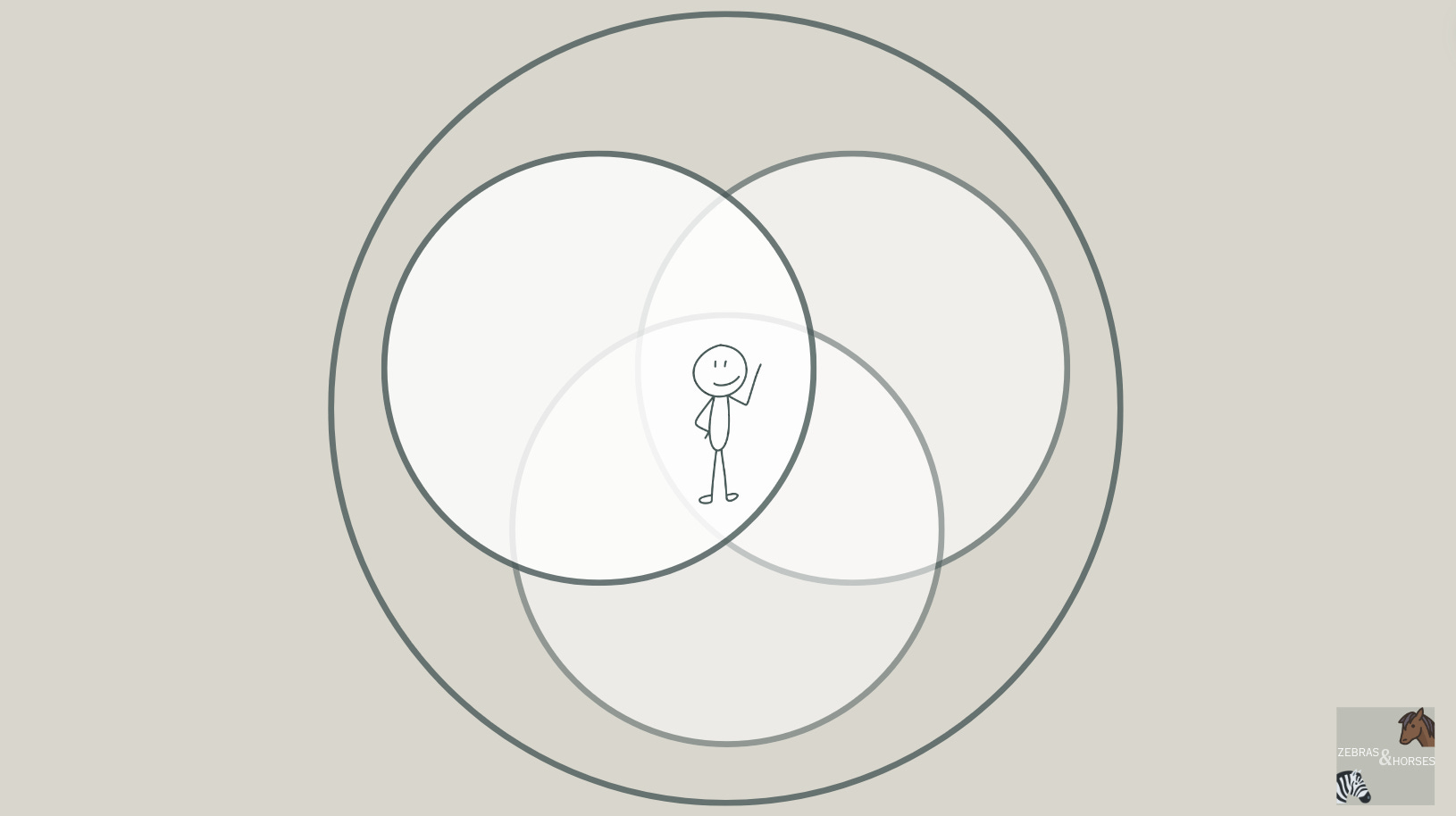
In an upcoming post, we will introduce the diagram below as a framework for proximity and discuss how it relates to dramatic and neglected problems.