
“Even if we think about how much technological progress is happening and how fast it is happening, I would argue that it’s a narrow cone of progress, where the definition of technology itself has narrowed.”
- Peter Thiel
In a previous post, we discussed how scalable ideas can come from dramatic or neglected problems and outlined the criteria distinguishing startups from Small Businesses.1
Even knowing the criteria, these companies need to satisfy, though, it is still challenging to identify the companies that can reach venture scale.
Conventional wisdom says that tech startups are the companies most likely to meet those criteria, but are they the only ones that can?
For example, reimagining women's shapewear made Sara Blakely a billionaire, but who could have predicted the idea would be so successful? The problem was definitely neglected, but many people - including women who had dealt with inadequate shapewear for years - overlooked its potential.2
Are there more opportunities of the same type as SPANX? Billion-dollar markets available to founders seeking to solve low-level problems? I don't know, but if I had to guess, there has to be. And if that is the case, what does it mean to be a tech startup?
I don't use the phrase 'low-level' lightly or disrespectfully. I use it to highlight the need for a more nuanced perspective of what tech startups actually look like.
In my opinion, CPG businesses—like SPANX—solve low-level problems because undergarments are close to our bodies like machine code is close to hardware.
Because this parallel was so obvious to me, I thought it would be interesting to use this analogy as a proxy for identifying other tech businesses.
A Smooth Canvas
“Models get airbrushed, we get SPANX.” - Sara Blakely
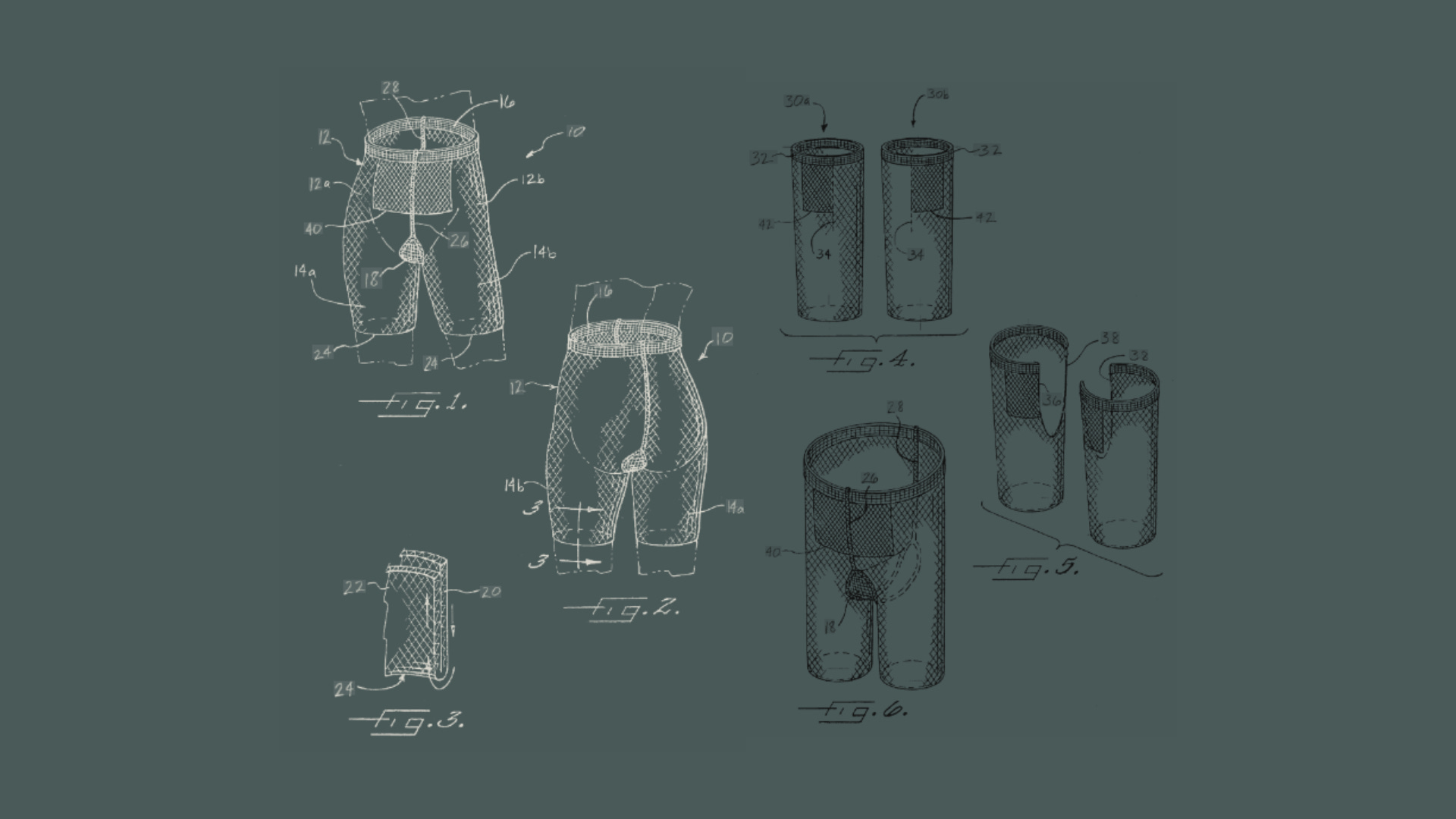
Software and hardware development usually distinguishes a tech startup from other industries, but there are other ways to define technology.
I explained the first way earlier but didn’t coin a phrase to describe it; it seems appropriate to do this now:
One way to classify a tech startup is based on scale from hardware — the degree of distance a product or service is from a body (Type A).3 When we define companies using this methodology, we are saying that they occupy a particular band on the spectrum between machine code and higher-level programming.4 They exist at a specific layer of abstraction.
Another way to classify tech startups is to define their products based on the degree of change they create. For example, innovation can be framed as how much a new offering departs from a previous offering…technology is any new way of doing things (Type B).
The important thing to note about these methods of classification is that they are industry-agnostic. Anyone can use them to classify traditional tech businesses and other tech businesses.
So you don’t need to know how to code to be a tech founder, per se.
For example, Sara Blakely decided that instead of constantly cutting the feet out of her pantyhose, she would patent shapewear made from the same material. Isn’t that new way of thinking a technological development? Shouldn’t she be considered a tech founder?
This idea clicked for me when I was listening to a discussion between Reid Hoffman and Tristan Walker (founder of Walker & Co.). They talked about Silicon Valley's philosophy for identifying what businesses are tech businesses. Reid says Silicon Valley typically wants to see computational processing in a business before calling it a tech business. This marker allows companies in industries like synthetic biology to be classified as tech. However, whether or not these companies are classified this way frequently is another story.
Tristan, however, disagrees with Reid's view. He believes that investors are less sophisticated and more focused on 'bits' than Reid acknowledges.
I could tell that Reid wasn’t ready to comment on the degree of nuance in Silicon Valley’s approach to classifying startups.
And I can’t comment on what this means for understanding an investor’s level of sophistication, that’s not my place; what I can say, though, is that it was obvious Tristan sees tech as more than just bits, even if he still doesn’t call Walker & Co a tech business:
Other tech businesses (coined by Reid and defined by Tristan) don't fit the mold of traditional tech businesses. These are companies that leverage technology to disrupt from the ground up.
Even if 'other tech' doesn't fit the traditional definition of tech, this exercise is still highly relevant and worth exploring. While it may seem impractical, this philosophical debate is useful because it has real implications for founders and how they build their teams.
Sara's use of Lycra to disrupt the shapewear industry from the ground up, full-stack, is a testament to the power of innovative thinking.
Sara didn't write code. However, she drafted the claims to patent the shapewear.
Sara didn't design a User Interface, but she created a name that made it easy for her customers to engage with the brand (the attention-grabbing name for the product and its unique spelling).
She also got distribution and virality via a feature with Oprah.
What's the difference between soldering wires and stitching fabric? What's the difference between thoughtfully considering how someone might experience your brand and examining the points of friction preventing activation rates from climbing on new software products? Not much. That is why I argue that real tech businesses blur the line of demarcation between bits and atoms. They rethink buffer layers.
Sara Blakely started Spanx because she wanted a smooth canvas. She uses that word a lot. What does it mean? She wanted a seamless undergarment, a buffer, or a base layer between her clothing and her body that would make the clothing look amazing.
"Your clothing is the art," she says, "and not having the right canvas really affects the painting."
The problem was that the stitching on the undergarments available in the market were visible through women's clothing. These stitches were even more noticeable when wearing specific colors or garments like white pants.
In Sara's mind, the stitching that formed the shape of this new undergarment would not be visible through overgarments. With the creation of SPANX, she could revolutionize her closet and the wardrobe of millions of other women, enabling them to confidently wear a wider range of colors.
Before Sara's invention, everyday women could not achieve the smooth canvas look that models did in magazines, and the truth is that neither could the models. Many tricks were used in post-production to make their clothes look that way.
That's where the tagline "models get airbrushed, we get SPANX" came from.
Photography tricks are for the glossy pages of magazines, SPANX customers live in the real world. They needed a practical, everyday solution, and that's exactly what Sara provided.
All tech founders are in search of a smooth canvas.
“The best place to look for secrets is where no one else is looking.” - Peter Thiel
Niels Bohr had to be somewhat jealous of Isaac Newton. It must have been so easy for Newton to come up with the laws of motion. An apple fell on his head, and he had an epiphany:
An object at rest will stay at rest unless a force acts on it.
Anybody could figure that out…right?
Yet, at the same time, I imagine at some point he would have realized he had no right to be jealous of him. The laws of motion are obvious to us today because Newton discovered them. The epiphany wasn’t as simple as an apple falling on his head.5
In the same way, it’s easy to feel jealous and believe that earlier generations had it much easier. This jealousy comes from a false belief that the orchard has been exhausted and there is no more room to innovate from the ground up.
The orchard has been exhausted, though, to some extent. Most of the Internet's core infrastructure, for example, has been built and commoditized. The capacity for differentiation has moved up the hierarchy of needs from basic functionality to non-basic functionality, design, and even fashion.6
When needs aren’t satisfied, though, fashion is elusive, and founders are forced to examine and rebuild core infrastructure like Sara was.
All tech founders are in search of a smooth canvas. And so an argument can be made that other tech businesses have the most latitude for creating and capturing value because people are looking for traditional tech. If that’s the case, investing in these companies is a big opportunity… and starting one is, too.
Appendix
The questions that identify if a business is a startup are growth rate, market opportunity over $1B, and potential for exit.
She also didn’t even know that she could have raised money. I believe she owned 100% of the company until 2021, when she sold a majority stake to Blackstone. She still owns a significant stake to this day.
I use “body” generally. A computer can be likened to a body in the same way that Earth can. Sort of like how the Kardashev scale measures technological advancement of a civilization based on where they are using energy from? Type 1: Still getting energy from its host planet; Type 2: Getting energy from its sun; Type 3: From the galaxy.
Similar to how the visible spectrum is the band of the electromagnetic spectrum that is visible to the human eye.
Newton, later in his life, publicized the story of the apple falling from the tree as a way to place his discovery of the inverse square law of gravitation all the way back to that initial visit to Lincolnshire in 1655. This was marketing. His writings from the period make it clear that these ideas emerged more gradually over a period of multiple years starting in 1655. For more, see John Gribbin, The Scientists: A History of Science Told through the Lives of Its Greatest Inventors (New York: Random House Trade Paperbacks, 2004), 185-186
https://readwise.io/reader/shared/01hwtq3wcg2ezb70zt4mbctvxd